“UNBREAKABLE” on BrightU: The three-day medicine factory on your kitchen counter
09/09/2026 / By Belle Carter
- “UNBREAKABLE” Chapter 11 presented a simple jar of broccoli seeds as a potential source of sulforaphane and a symbol of decentralized food and medicine production.
- The episode focused on glucoraphanin and myrosinase, emphasizing the importance of timing and handling, including harvesting when the first cotyledons appear and avoiding excessive heat.
- Freezing sprouts was presented as a way to rupture plant cells and facilitate the desired chemistry, while a 70 degrees C (158 degrees F) heat treatment followed by mustard seed powder was offered as an alternative when electricity is unavailable.
- Mike Adams framed the sprouting jar as a miniature pharmaceutical operation, declaring, “It’s a production line for medicine.”
- The episode connected broccoli sprouting to a “Victory Garden reimagined” featuring turmeric, berries, herbs, mushrooms, saved seeds, compost and rainwater – promoting practical knowledge and home production as pathways toward greater independence from centralized systems.
What if one of the most intriguing survival tools in your home could fit inside a glass jar? In “UNBREAKABLE’s” Chapter 11, aired on Sept. 8, a handful of broccoli seeds became the unlikely protagonist of a larger argument about food, health and independence.
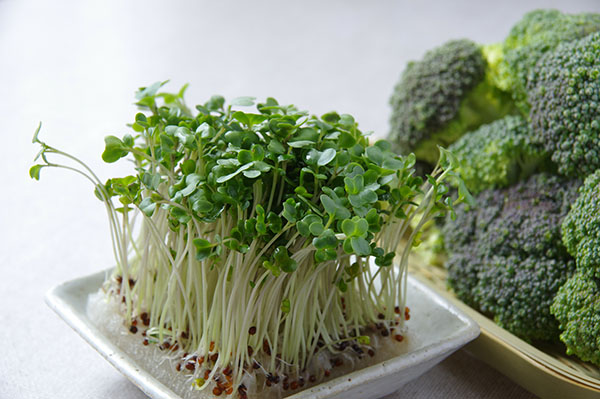
The episode presented broccoli sprouting as a remarkably accessible process: Seeds were soaked, rinsed repeatedly and watched as tiny sprouts emerged, with Mike Adams describing the jar as a miniature production system for compounds he associated with cellular protection. The transformation was striking precisely because it was so ordinary. There was no laboratory, factory or pharmaceutical supply chain in sight – just seeds, water and a kitchen counter. Within days, Adams said, the sprouts can become a source of sulforaphane, turning an everyday household task into what he portrayed as a form of decentralized medicine production.
From seed to “liquid DNA repair medicine”
The fascinating part of the process lay in the chemistry. The episode focused on glucoraphanin, a compound in broccoli seeds and sprouts and myrosinase, an enzyme involved in converting it into sulforaphane; according to the episode, timing and handling matter. The sprouts were harvested when their first cotyledons appear, while Adams warned that excessive heat can interfere with the conversion process.
The episode then took an unexpected turn: Freezing the harvested sprouts was presented as another way to rupture plant cells and help facilitate the desired chemistry. The thawing liquid was even described as “liquid DNA repair medicine.” For viewers, the appeal was not simply the promise attached to the sprout, but the glimpse into the interviewee’s kitchen-counter experimentation – an attempt to understand and manipulate plant chemistry without sophisticated equipment.
Adams also proposed an alternative for circumstances in which electricity is unavailable. It described heating the sprouts to approximately 70 degrees C (158 degrees F) for about 10 minutes, followed by the addition of mustard seed powder, presenting the combination as a workaround for preserving or restoring the relevant enzymatic activity. Whether viewers accepted these claims or question them, the underlying idea is provocative: Ordinary food preparation can become a kind of hands-on biochemical exercise.
A jar as a symbol of independence
But the broccoli sprouts ultimately represented something much bigger than broccoli. The episode repeatedly returned to the idea that growing and processing useful plants can reduce dependence on centralized systems. A sprouting jar became, in the speaker’s framing, a tiny pharmaceutical manufacturing operation – one that can theoretically be reproduced in kitchens rather than concentrated in distant institutions.
“It’s a production line for medicine,” Adams declared.
That philosophy gave the humble jar its dramatic significance. The episode connected sprouting to a broader “Victory Garden reimagined,” alongside turmeric, berries, herbs, mushrooms, saved seeds, compost and rainwater collection. The goal was not merely to stockpile supplies, but to cultivate the knowledge and practical skills to reproduce them. In that vision, the broccoli seed was more than a nutritional ingredient: It was a symbol of self-reliance. The episode asked viewers to consider whether resilience begins not with a warehouse full of provisions, but with understanding what can be grown, transformed and produced at home.
Want to know more?
Discover the concepts explored in Mike Adams’ “UNBREAKABLE” course, which examines DNA integrity, cellular repair pathways, radiation exposure and the relationship between nutrition and genetic resilience, streaming on BrightU. Across 13 chapters, the course takes viewers through the fundamentals of DNA damage and repair, including NHEJ, homologous recombination, double-strand breaks and cellular mechanisms involving BRCA1, 53BP1 and CHK1. It also explores Adams’ perspectives on spike protein, nuclear fallout, environmental stressors and the nutritional strategies he believes may support DNA repair.
Whether you’re new to the subject or looking to explore the science presented in the course in greater depth, you can purchase the “UNBREAKABLE” course package here to learn more about its framework for genetic preparedness and cellular resilience. Upon purchase, you’ll gain access to the full 13-chapter course and accompanying educational materials covering DNA repair, nutrition, environmental exposure and Adams’ proposed strategies for supporting the body’s natural repair mechanisms.
Sources include:
Submit a correction >>
Tagged Under:
broccoli, food independence, food science, food supply, gardening, glucoraphanin, health freedom, Herbs, liquid DNA, medicine factory, Mike Adams, myrosinase, natural cures, natural health, pharmaceutical production, Plants, self sufficiency, sulforaphane, survival, sustainable living, UNBREAKABLE, victory garden
This article may contain statements that reflect the opinion of the author
RECENT NEWS & ARTICLES