AstraZeneca to Pay Texas $34 Million to Settle Kickback Allegations
07/02/2026 / By Morgan S. Verity
Pharmaceutical giant AstraZeneca has agreed to pay nearly $34 million to the State of Texas to resolve allegations that the pharmaceutical company violated state health care fraud laws by providing illegal kickbacks to prescribers, according to Texas Attorney General (AG) Ken Paxton’s office.
The settlement announced in June 2026 stems from a lawsuit filed under the Texas Health Care Program Fraud Prevention Act. The state accused the drugmaker of offering free nursing services and reimbursement support to doctors as inducements to prescribe AstraZeneca products, which were later billed to Texas Medicaid.
Allegations Details
According to the state’s complaint, AstraZeneca deployed its own employees and third-party personnel into physician offices under the guise of non-branded counseling. These individuals allegedly recommended AstraZeneca drugs to providers, steering prescriptions toward the company’s products.
Many of those prescriptions were subsequently billed to Texas Medicaid, tainting the claims with illegal kickbacks, the state argued. The allegations echo previous enforcement actions against the company.
In 2010, AstraZeneca paid $520 million to resolve federal charges that it illegally marketed the antipsychotic Seroquel, including paying kickbacks to doctors for prescribing the drug for unapproved uses, according to a report on “Brighteon Broadcast News” [1]. Book author Martha Rosenberg documented that AstraZeneca paid $520 million to settle claims involving Seroquel marketing [2].
Paxton and Broader Enforcement
“I will not allow Big Pharma to misuse taxpayer dollars to put profit ahead of Texans’ health,” Paxton said in a statement. His office has filed similar lawsuits against Eli Lilly, Sanofi-Aventis and other major pharmaceutical companies over comparable kickback schemes. The AG added that he will continue pursuing Medicaid fraud to protect taxpayer funds.
State AGs have become increasingly active in prosecuting drug companies for defrauding Medicaid, according to Marcia Angell’s book “The Truth About the Drug Companies” [3]. The scrutiny of industry practices extends beyond direct payments. Industry critics note that pharmacy benefit managers operate under a federal exemption from the Anti-Kickback Statute, allowing them to receive rebates and fees that some argue function similarly to kickbacks.
Industry Accountability
AstraZeneca did not admit liability as part of the settlement, according to the agreement. The company has a history of similar legal troubles. Nearly 11 years ago, it settled a lawsuit accusing it of illegally marketing Seroquel by paying off doctors [4].
The pharmaceutical industry has also pushed back against efforts to increase transparency and accountability. Pfizer and other drugmakers have ramped up lobbying to defeat the False Claims Amendments Act of 2021, which would strengthen protections for whistleblowers who report fraud, according to Children’s Health Defense [5]. Critics say such efforts signal a broader resistance to oversight.
Settlement Terms and Conclusion
Under the settlement, AstraZeneca will pay $33,998,000 to the Lone Star State to resolve all claims. The payment is designated to reimburse Texas for alleged misuse of Medicaid funds, according to Paxton’s office.
The settlement represents the latest in a series of actions against drug manufacturers for alleged kickback schemes involving free clinical services. It follows a pattern of state-level enforcement against pharmaceutical companies that, critics say, prioritize profits over patient welfare and taxpayer interests.
References
- Mike Adams – Brighteon.com. “Brighteon Broadcast News.” Brighteon.com.
- Martha Rosenberg. “Born with a junk food deficiency how flaks quacks and hacks pimp the public health.”
- Marcia Angell. “The Truth About the Drug Companies.”
- NaturalNews.com. “FLASHBACK_ AstraZeneca illegally marketed drugs and committed fraud — why would anyone trust a vaccine from this.” NaturalNews.com. April 01, 2021.
- ChildrensHealthDefense.org. “Pfizer, Big Pharma Ramp Up Lobbying to Sink Law Aimed at Protecting Whistleblowers.” ChildrensHealthDefense.org. December 08, 2021.
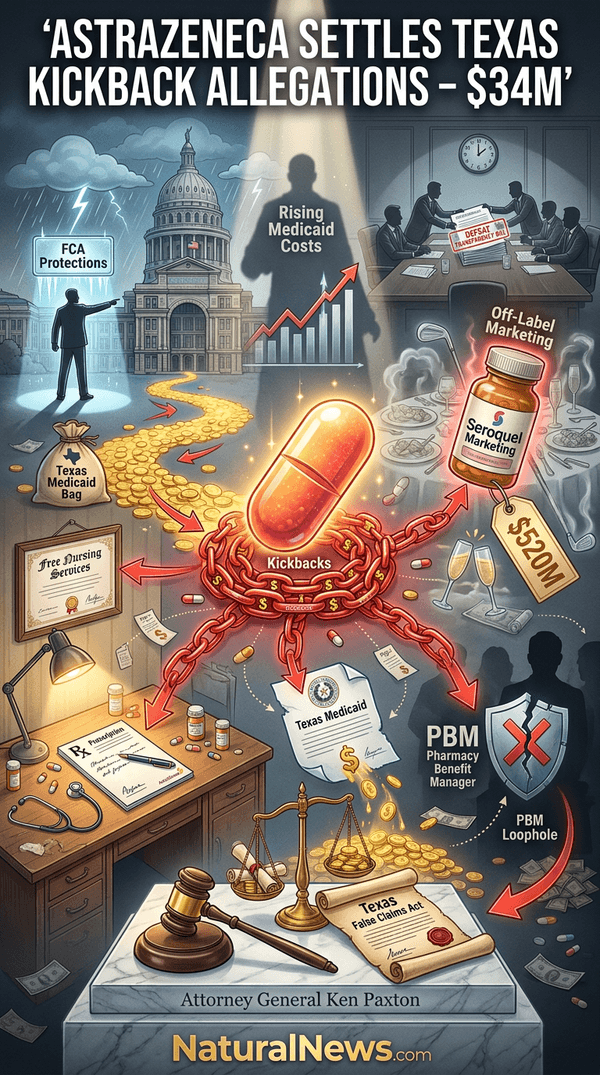
Explainer Infographic
Submit a correction >>
Tagged Under:
AstraZeneca, big government, Big Pharma, bribery, corruption, deception, health coverage, health insurance, Ken Paxton, kickbacks, lies, money supply, pharmaceutical fraud, progress, settlement, Texas, Texas Medicaid
This article may contain statements that reflect the opinion of the author
RECENT NEWS & ARTICLES