They want your child’s body autonomy: Democrats’ lawsuit aims to crush informed consent on vaccines
02/25/2026 / By Willow Tohi
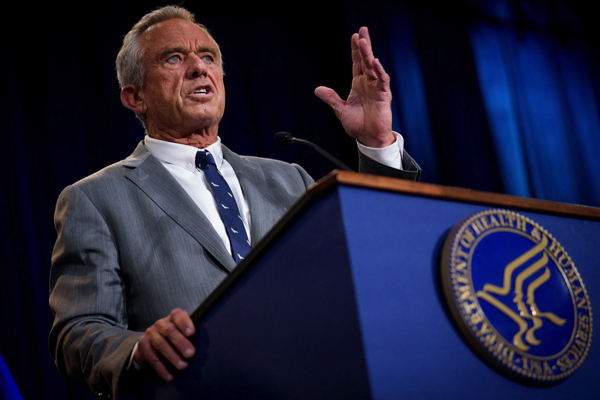
- Fifteen Democratic-led states are suing the Trump administration over recent changes to the childhood vaccine schedule.
- The lawsuit alleges Health Secretary Robert F. Kennedy Jr. unlawfully appointed vaccine-skeptical advisors and bypassed scientific review.
- The revised schedule downgrades recommendations for six vaccines, moving them to a “shared decision-making” category.
- Plaintiffs argue the changes will decrease vaccination rates, increase preventable diseases and strain state resources.
- The administration defends its actions as legal and aligned with the practices of some peer nations.
In a significant challenge to federal health policy, a coalition of 15 states filed a lawsuit on February 24, against the U.S. Department of Health and Human Services and Secretary Robert F. Kennedy Jr. The states, all led by Democrats, aim to block recently enacted revisions to the nation’s childhood immunization schedule, which they argue were made unlawfully and without scientific foundation. The legal action, filed in a California federal court, centers on claims that the Trump administration’s changes gamble with public health by sowing confusion and reducing vaccination rates.
The core of the controversy
The lawsuit targets two primary actions taken by Kennedy since his appointment. First, it challenges his June 2025 decision to dismiss all voting members of the Centers for Disease Control and Prevention’s Advisory Committee on Immunization Practices (ACIP) and replace them with 17 new appointees who share his noted skepticism of vaccines. Second, it seeks to overturn a revised childhood vaccine schedule issued in January 2026, which was developed based on guidance from this reconstituted panel.
The updated schedule altered the recommendation status for vaccines against diseases including hepatitis A and B, certain meningococcal strains, and COVID-19 for healthy children. These shots were moved from a category of universal recommendation to one of “shared clinical decision-making,” meaning they would be administered after a consultation between a doctor and parent, rather than as a standard part of the routine schedule. The states contend this shift will lead to decreased immunization coverage.
States allege public health harm and legal violations
In their filing, the attorneys general argue the administration violated federal law by failing to properly consult the statutorily established advisory committee before making sweeping changes. They assert the new schedule “will damage public health by decreasing vaccine uptake and increasing rates of vaccine-preventable diseases,” creating confusion and spreading misinformation.
The states also highlight the financial burden they expect to bear. California Attorney General Rob Bonta warned that without court intervention, states would be forced to expend significant resources to treat once-rare diseases, respond to outbreaks and combat vaccine hesitancy. The lawsuit cites decades of ‘scientific evidence’ and CDC data showing vaccines have prevented hundreds of millions of illnesses and over a million deaths among American children born since 1994.
Administration defends authority and policy shift
The Department of Health and Human Services has firmly rejected the states’ claims. In a public statement, a department spokeswoman called the lawsuit a “publicity stunt” and asserted that “by law, the health secretary has clear authority to make determinations on the CDC immunization schedule and the composition of ACIP.”
Officials defend the policy changes as a “common-sense” alignment with practices in other developed nations. They point to an internal review ordered by President Donald Trump that found the U.S. was a global outlier in routinely recommending certain vaccines, such as hepatitis A. A memorandum from then-acting CDC Director Jim O’Neill stated the update was intended to increase public trust in vaccines. The administration also maintains that the new ACIP members bring valuable “complex and nuanced perspectives.”
A broader legal and ideological conflict
This multi-state lawsuit is not an isolated event. It mirrors a separate case filed in 2025 by major medical organizations, including the American Academy of Pediatrics, which also seeks to block the revised schedule and the new ACIP appointments. A federal judge in Massachusetts heard arguments in that case earlier in February and a ruling is pending.
The legal battles reflect a deep ideological divide over public health authority and vaccine policy. The plaintiffs frame the conflict as a defense of evidence-based medicine against politically motivated interference. They specifically critique the administration’s reliance on Denmark’s vaccine schedule as a model, arguing the small, homogeneous nation with universal healthcare is not a comparable peer to the diverse and complex United States.
A high-stakes clash for public health’s future
The outcome of this lawsuit will have profound implications for the landscape of American public health. At stake is the process by which the nation’s vaccine recommendations are formulated and revised. The case tests the limits of a health secretary’s authority to reshape expert advisory bodies and redefine long-standing medical guidance. As the courts deliberate, the core question remains whether our national immunization schedule is subject to the rigorous, independent scientific review that public trust requires. This is not about political allegiance — or shouldn’t be — but about ensuring our health guidance is anchored in the best available evidence and regularly assessed against outcomes. A truly scientific approach demands we periodically review our schedule, compare our health metrics with those of other developed nations, and be willing to adapt based on transparent, unbiased data. The goal must be a process that earns public confidence through its integrity, thereby supporting sustainable vaccination rates and protecting community health for generations to come.
Sources for this article include:
Submit a correction >>
Tagged Under:
biased, big government, Big Pharma, body autonomy, CDC, Censored Science, Collapsifornia, health freedom, intolerance, Liberty, Medical Tyranny, outbreak, outrage, Public Health, RFK Jr, smeared, vaccine wars, vaccine zealots, vaccines
This article may contain statements that reflect the opinion of the author
RECENT NEWS & ARTICLES