New CDC nominee vows science integrity amid questions on political pressure
07/17/2026 / By Willow Tohi
- Dr. Erica Schwartz, President Trump’s third CDC director nominee, pledged to “never betray the science” during July 15 Senate confirmation hearings.
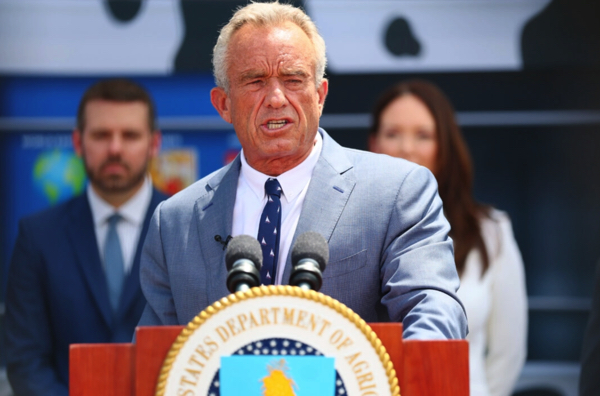
- Schwartz faces skepticism over whether she will resist pressure from HHS Secretary Robert F. Kennedy Jr., who has pursued vaccine policy changes.
- The nominee declined to criticize Kennedy’s actions, including reported directives to suspend flu vaccination campaigns, calling such questions “hypotheticals.”
- CDC has lost over 3,000 employees since Trump returned to office, with morale plummeting amid a revolving door of temporary leaders.
- Schwartz previously served as deputy surgeon general and Coast Guard chief medical officer, and currently works for UnitedHealth Group.
Hearing reveals tensions over agency direction
Dr. Erica Schwartz, President Donald Trump’s third nominee to lead the Centers for Disease Control and Prevention, told senators July 15 she will “never betray the science” as director, yet repeatedly declined to criticize actions taken by HHS Secretary Robert F. Kennedy Jr. that have reshaped the embattled agency.
The confirmation hearing before the Senate Health, Education, Labor and Pensions Committee exposed deep divisions over the future of the nation’s top public health agency, which has lost more than 3,000 employees—over a quarter of its workforce—since Trump returned to office. Schwartz, 54, a former deputy surgeon general and Coast Guard chief medical officer, now works for UnitedHealth Group and would inherit an agency in turmoil.
Sen. Bill Cassidy, the Louisiana Republican who chairs the committee, pressed Schwartz directly on whether she would resist what he called “crazy, stupid things” that undermine vaccine confidence. Schwartz responded that she would “always have the public’s health in mind.”
The vaccine question
Cassidy, a physician, opened the hearing by stating that “vaccines are overwhelmingly safe and effective” and warned that “any equivocation of these facts” would cost Schwartz his support.
Schwartz told Sen. Bernie Sanders she accepts “overwhelming evidence” that vaccines do not cause autism, a claim Kennedy has publicly entertained. However, when asked whether she would report to Congress if administration officials demanded “unscientific policies,” Schwartz said she does not believe the president or secretary would do so.
The nominee’s careful answers frustrated several senators who pointed to documented actions by Kennedy, including internal CDC emails showing he directed staff to suspend promotion of flu vaccination campaigns during a flu season. When Sen. Maggie Hassan, a New Hampshire Democrat, asked if Schwartz would resist such an order, the nominee replied: “Senator, I don’t speak in hypotheticals.”
“It isn’t hypothetical. It happened,” Hassan responded.
Historical context
The CDC director position has become a revolving door since Trump’s return to power. The president’s first pick, former Florida congressman Dr. Dave Weldon, saw his confirmation hearing canceled in March 2025 after insufficient Republican support, reportedly due to his past work scrutinizing vaccine safety.
The White House then nominated Dr. Susan Monarez, who was confirmed by the Senate but ousted in less than a month. Trump administration officials said she was not aligned with their agenda. Several key CDC scientific leaders resigned in protest.
Trump nominated Schwartz in April, with Kennedy telling Congress he vetted her stance on vaccines and approved the choice. Schwartz would be the third nominee and potentially the second confirmed director in under 18 months.
Agency turmoil and mission reorientation
The CDC has suffered from what observers describe as a crisis of confidence. The agency lost thousands of employees through layoffs and resignations, with political appointees—many lacking medical or public health training—filling the front office. National Institutes of Health Director Jay Bhattacharya has been overseeing the CDC most recently.
Schwartz acknowledged the agency had experienced “mission creep” and agreed it should prioritize infectious disease response. She pledged “radical transparency” to rebuild public trust and expressed openness to Republican requests to investigate whether AI data centers cause health problems.
Dr. David Margolius, director of Cleveland’s health department, described the current situation as one where local officials must “choose their own adventure” without national leadership.
The road ahead
Schwartz disclosed that if confirmed, she would leave UnitedHealth Group, where she earns approximately $850,000 annually. She would also resign from boards of Butterfly Network Inc., Aveanna Healthcare, and the Searching for Solutions Institute.
The hearing also considered Sean Kaufman, Trump’s nominee for assistant health secretary for preparedness and response, who faced questions about past social media posts criticizing vaccines and the CDC. Kaufman told senators he believes vaccines are “safe and effective” and supports mRNA technology.
For an agency that once commanded international respect, the question is not merely who leads it—but whether any director can restore independence to an institution now deeply enmeshed in political controversy.
Sources for this article include:
Submit a correction >>
Tagged Under:
big government, Big Pharma, CDC, Erica Schwartz, health freedom, Jay Bhattacharya, Public Health, Resist, RFK Jr, rigged, Trump, vaccine wars, vaccines
This article may contain statements that reflect the opinion of the author
RECENT NEWS & ARTICLES