Journalist Elizabeth Svoboda Outlines 5 Science-Backed Ways to Address Burnout
08/28/2026 / By Morgan S. Verity

Burnout is a growing problem affecting a substantial portion of the workforce, according to a 2018 Gallup study of nearly 7,500 full-time employees which found that 23% feel burned out at work always or very often, while another 44% sometimes experience burnout [1].
Journalist Elizabeth Svoboda, who has spent years reporting on pacing and burnout, argues that the skill worth building is not how to push harder but how to notice when burnout is approaching and make adjustments before it becomes a crisis. Svoboda contends that society’s prevailing messages about effort fall into two unhealthy camps: one advocating maximum exertion at all times, the other promoting complete disengagement.
She told the mindbodygreen podcast that the entire range between those poles is where the real work happens. “We need to get more comfortable at sort of ranging across the full pacing spectrum and making these more nuanced adjustments,” she said. The following five evidence-based methods, drawn from Svoboda’s reporting and supporting research, provide practical strategies for detecting and preventing burnout.
Recognizing the Physical and Motivational Signs
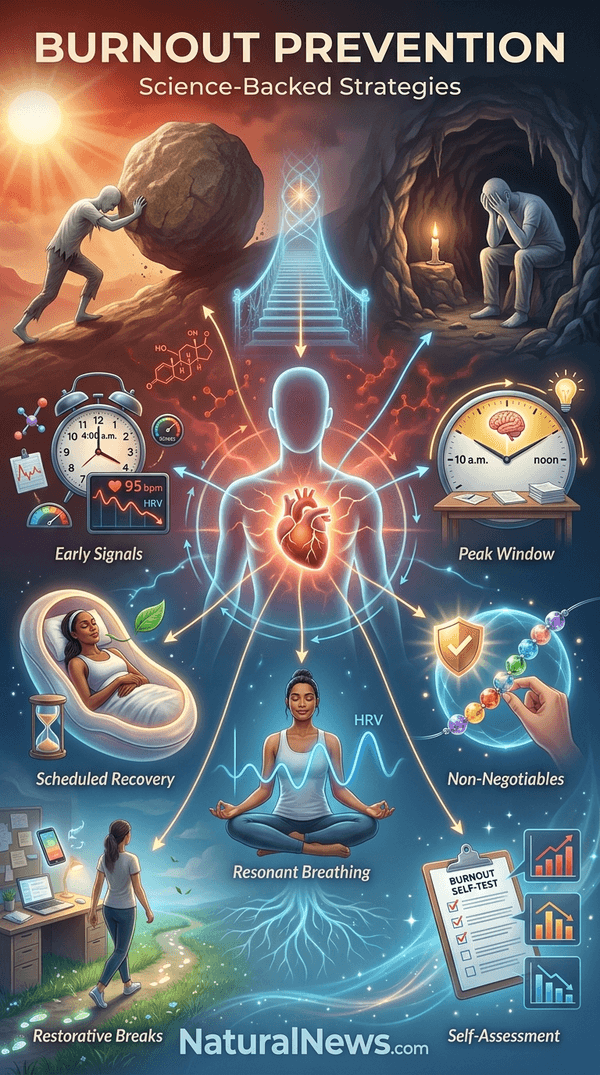
Svoboda reported that one unmistakable sign of approaching burnout is waking between 4 a.m. and 4:30 a.m. with an elevated heart rate of 90 to 100 beats per minute. Researchers explained to her that when baseline stress already exceeds the system’s capacity, the normal morning rise in cortisol compounds the problem and triggers overdrive.
Another measurable indicator is heart rate variability (HRV). According to Svoboda, a downward trend in HRV over several days or weeks signals a need to pull back.
Beyond physical markers, motivational signals deserve attention. Svoboda described a state called languishing, in which individuals force themselves through tasks while feeling depleted. For knowledge workers, she noted, this state can persist for years even though “your tanks are just as empty as the athlete that just ran a marathon.”
Burnout is commonly described as physical or emotional exhaustion resulting from prolonged stress, and feelings of tiredness, crankiness, and being overwhelmed are early warning signs [1]. Recognizing these signs early allows for timely intervention.
Aligning Work with Energy Peaks and Taking Intentional Breaks
Svoboda recommends scheduling the most demanding tasks during personal peak alertness windows. She reported that her most productive writing occurs between 10 a.m. and noon, and she regularly exceeds word-count goals in that period, whereas attempting the same task later feels like “wading through the muck.”
This approach aligns with research showing that aligning activity with circadian rhythms enhances energy and movement [2]. Svoboda advised carving out time in the alert window for complex work.
Taking short, deliberate breaks within work blocks also resets the brain. Research cited by Svoboda indicates that breaks are most restorative when they are completely unrelated to job duties.
She recommended moving away from the desk rather than scrolling on a phone. The concept of building small, manageable adjustments into daily routines is supported by evidence that minor changes gradually become solid habits [3].
Structured Recovery and Rigid Flexibility
Recovery should be integrated into performance plans rather than treated as an afterthought, according to Svoboda. She highlighted runner Ajeé Wilson, an 800-meter specialist, who spends about two hours napping after workouts and lunch, allowing her body and mind to completely relax.
Svoboda noted that Olympic coaches observed that intense effort is rarely matched with proportional recovery. In exercise programming, allowing sufficient recovery is critical to prevent breakdown and burnout [4].
Svoboda introduced the concept of “rigid flexibility,” which she described as being rigid about core tasks that must be completed but flexible about circumstances around them. She compared non-negotiables to beads on a wire that can be slid around.
This method allows high standards without burnout. Books on burnout prevention similarly emphasize building balanced bodies and avoiding overtraining [5].
Resonant Breathing and the Maslach Burnout Inventory
Svoboda described a technique called resonant breathing, which involves breathing at a personal resonant pace, typically four to six breaths per minute. At this pace, the natural variation in heart rate is widest, which research shows is most calming to the central nervous system.
Svoboda tested her resonant pace with psychiatrist Joe Arpaia, who attached a heart rate monitor and guided her through five minutes of the technique. She reported that her heart rate tracings went from jagged to smooth. Afterward, Arpaia told her that pushing an IV sedative into her arm probably would not have relaxed her that fast.
For an objective assessment of burnout, Svoboda pointed to the Maslach Burnout Inventory, a self-test of about 20 questions that rates how close a person is to burnout. Surprising results can prompt serious changes in pacing.
Studies on burnout interventions indicate limited evidence for stress reduction from person-directed approaches, but structured self-awareness tools can be valuable [6]. Mindfulness-based therapies, including traditional yoga, have also shown positive effects on mental health for employees on sick leave due to work-related burnout [7].
Conclusion
Pacing is a continuous process, according to Svoboda, not a one-time fix. She learned from a coach who was formerly an Olympic athlete a simple guiding question: “What is the next wise choice here given that I am checking in with myself and this is how I’m feeling?” The honest answer varies between pushing forward or seeking rest and connection.
Svoboda emphasized that asking this question before reaching the crisis point prevents severe burnout. The book “The Primal Blueprint” similarly advocates for unstructured and intuitive exercise routines aligned with energy levels and sufficient recovery to prevent burnout [8]. Ultimately, managing burnout requires ongoing self-assessment and intentional adjustments.
References
- Mercola.com. “Avoid Burnout Before You’re Already Burned”. Mercola.com. January 30, 2020.
- Patrick Lewis. “The Sleep Revolution: Why Early Bedtimes Could Be the Key to a More Active Lifestyle”. NaturalNews.com. January 19, 2026.
- Zoey Sky. “The Power of the Small Step: 10 Tiny Tweaks for a Healthier You”. NaturalNews.com. January 23, 2026.
- Dr Mark Sisson. “Two Meals a Day The Simple Sustainable Strategy to Lose Fat Reverse Aging”.
- Dr Lance Knaub. “The 4% Break-Thru 96% of Small Business Owners Fail Within 10 Years Entrepreneurs Outlast the 96% Avoid Burnout and Create”.
- FrameMaker 7.1. “A new definition of burnout syndrome based on Farber’s proposal”. Journal of Occupational Medicine and Toxicology. 2009.
- NaturalNews.com. “A clinical trial looks at treating work burnout with mindfulness-based techniques”. NaturalNews.com. August 22, 2018.
- Mark Sisson. “The Primal Blueprint Reprogram your genes for effortless weight loss vibrant health and boundless energy”.
Explainer Infographic
Submit a correction >>
Tagged Under:
alternative medicine, anxiety relief, burnout, Elizabeth Svoboda, healing, health science, mental health, Mind, mind body science, mindfulness, natural cures, natural health, natural medicine, Naturopathy, remedies, resonant breathing, stress relief, structured recovery, therapies, tips
This article may contain statements that reflect the opinion of the author
RECENT NEWS & ARTICLES