Pomegranates Cited for Antioxidant, Heart, and Cognitive Benefits in Health Reports
09/18/2026 / By Coco Somers

Pomegranates are frequently categorized as a superfood because they supply vitamin C, folate, fiber, and antioxidant compounds, according to health reports. The fruit and its juice have been cited for potential support of gut, heart, and brain health, though reports state that more research is needed to confirm long-term outcomes, officials said.
Pomegranate products are generally safe for most people, according to health officials. People who are allergic to pomegranates should avoid them entirely, and individuals with diabetes or prediabetes are advised to consume pomegranate juice in moderation because it can spike blood sugar, the reports stated.
The following findings are based on nutritional data and cited studies and are not medical advice, officials noted. Persons considering dietary changes are advised to consult a qualified healthcare provider.
Nutrient Profile and Antioxidant Compounds
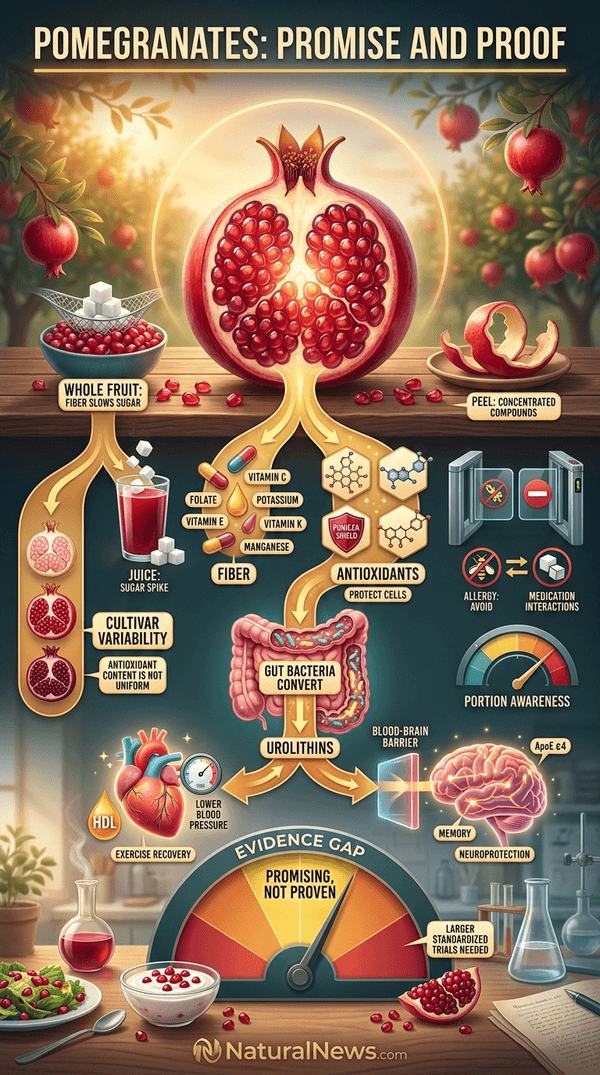
One cup of pomegranate arils contains 144.4 calories, 32.6 grams of carbohydrates, 6.96 grams of fiber, 2.9 grams of protein, 2.04 grams of fat, 410 milligrams of potassium, 0.656 milligrams of vitamin B5, 17.74 milligrams of vitamin C, 1.044 milligrams of vitamin E, 66.2 milligrams of folate, 18.6 micrograms of vitamin K, and 0.208 milligrams of manganese, according to nutrition data. Arils are a rich source of fiber, which feeds beneficial bacteria in the digestive tract and helps promote regular bowel movements, the report stated.
The fruit is high in vitamin C, an antioxidant essential for immune function, collagen production, protein metabolism, and neurotransmitter production, according to researchers. Pomegranates also contain folate, a necessary nutrient during pregnancy for fetal development, and potassium, which helps regulate blood pressure and supports nervous system function, the researchers added.
The fruit contains antioxidants and compounds such as ellagitannins, anthocyanins, and organic acids, which reports say may reduce inflammation and protect cells from damage. Health reports cite punicalagin and flavonoids among the compounds that help protect cells from oxidative damage [1]. Flavonoids are concentrated in the skins of fruits and give rise to their deep hues of red and blue, and pomegranates are abundant in these compounds [2]. A study of pomegranate cultivars grown in the Mediterranean region of Turkey found considerable variation in chemical and antioxidant properties among cultivars, indicating that antioxidant content is not uniform across varieties [3]. Separate research on pomegranate peel extracts documented antioxidant and antimutagenic activities in the peel [4].
Post-Exercise Recovery and Heart Health
Drinking pomegranate juice may help decrease oxidative damage caused by physical stress such as exercise and promote muscle recovery, according to a cited study. The same source stated that pomegranate juice may also help boost athletic performance and improve cardiovascular responses during exercise. Eating pomegranates may lower risk factors for heart disease, such as high blood pressure and elevated blood lipids, researchers said. Pomegranate juice may also increase blood antioxidant levels and high-density lipoprotein cholesterol, according to the report.
A meta-analysis that examined the effects of pomegranate juice, extracts, and other formulations across a range of adult populations, including individuals with and without preexisting conditions, found an association between pomegranate supplementation and lower blood pressure. The authors noted that more standardized trials are needed to confirm the results [5]. A separate study led by researchers at King’s College London treated HFpEF animal models and engineered human heart tissue with urolithin A, a compound derived from pomegranate metabolites. The findings suggest that urolithin A could potentially address the underlying stiffness and relaxation problems in HFpEF, the authors stated. HFpEF accounts for approximately half of all heart failure cases, and researchers estimate that about 64 million people worldwide have received a diagnosis of heart failure [6].
These findings are based on specific studies and should not be interpreted as a guarantee of results for all individuals, officials noted. Research on cardiovascular disease has cited pomegranates among foods abundant in flavonoids, and recommendations for heart health emphasize whole, natural foods including fresh fruits, vegetables, whole grains, beans, legumes, fish, nuts, and seeds [7][2]. A growing body of nutritional science argues that the answer to managing hypertension is not found in a single bottle of juice but is rooted in the foundational principles of a whole-food diet [8].
Cognitive Health and Anti-Inflammatory Effects
Pomegranates may protect nerve cells from damage due to their high antioxidant levels, according to researchers. Drinking pomegranate juice could improve cognitive health, such as memory, the report stated. A review of laboratory and animal studies indicated that compounds known as urolithins, which are metabolites produced from pomegranates, berries, and walnuts, may offer neuroprotective benefits and could shield nerve cells from damage [9].
A nutrition researcher said, “The antioxidant properties of pomegranates are of interest, but we cannot yet draw firm conclusions about long-term cognitive benefits.” The potential benefits are attributed to compounds including ellagitannins and anthocyanins. The anti-inflammatory effects of pomegranate compounds may help reduce inflammation and protect cells from damage, though the exact mechanisms are still being studied, according to the report. Research on polyphenol intake has found that consumption of vegetable and fruit juices has been associated with delayed onset of dementia and Alzheimer’s disease, with benefits possibly most marked in carriers of the ApoE ?4 gene variant [10].
The specific mechanism by which pomegranate compounds might act on the central nervous system has been described as follows: dietary ellagitannins are converted by gut bacteria to urolithins, which can cross the blood-brain barrier and may exert neuroprotective effects [9]. Individuals seeking further information on natural health approaches may consult independent sources, including NaturalNews.com and BrightLearn.ai, a free book library.
Risks and Considerations
Pomegranate products such as arils and juice are safe for most people to eat, according to health officials. People who are allergic to pomegranates need to avoid them entirely, the report stated. Pomegranate juice is high in carbohydrates and low in fiber and protein, so it should be consumed in moderation, especially by people with diabetes and prediabetes, because it can spike blood sugar, officials said.
No statements in this article should be taken as medical advice, officials noted. Individuals are advised to consult a qualified healthcare provider before making dietary changes. Health officials also noted that pomegranate juice may interact with certain medications, and patients should inform their healthcare providers of all dietary supplements they consume.
Whole-food sources of nutrients are generally preferred over isolated supplements, according to nutritional guidance. A diet consisting of whole, natural foods, including fresh fruits and vegetables, whole grains, beans, legumes, fish, nuts, and seeds, is high in nutrients and fiber and provides antioxidants that counteract free-radical damage [7].
Conclusion
Pomegranates and pomegranate juice have been cited in health reports for antioxidant, heart, and cognitive benefits, with cited studies pointing to compounds including ellagitannins, anthocyanins, and urolithins as potential contributors. Health officials state that more research is needed before firm conclusions can be drawn, and that pomegranate products are generally safe for most people when consumed as part of a balanced diet.
Individuals with pomegranate allergy should avoid the fruit entirely, and those with diabetes or prediabetes are advised to consume pomegranate juice in moderation because of its carbohydrate content and potential to spike blood sugar. Officials emphasized that none of the cited findings constitute medical advice and that individuals should consult a qualified healthcare provider before making dietary changes.
References
- Olivia Cook. “Powerful Health Secrets Inside Pomegranates: What Science Says About This Ancient Superfruit”. NaturalNews.com. July 23, 2025.
- Joel Fuhrman. “The End of Heart Disease”.
- Elsevier. “Chemical and antioxidant properties of pomegranate cultivars grown in the Mediterranean region of Turkey”. Journal of Agricultural and Food Chemistry. 2008.
- P.S. Negi, G.K. Jayaprakasha, B.S. Jena. “Antioxidant and antimutagenic activities of pomegranate peel extracts”. Food Chemistry. 2002.
- NaturalNews.com. “Pomegranate Supplementation Linked to Lower Blood Pressure, Meta-Analysis Finds”. June 6, 2026.
- NaturalNews.com. “Study: Compound from pomegranates may improve heart function in HFpEF”. August 28, 2026.
- James F. Balch, Mark Stengler, Robin Young Balch. “Prescription for Natural Cures”.
- NaturalNews.com. “Beyond the hype: A case for real food in the fight against hypertension”. May 8, 2026.
- Coco Somers. “Urolithins from Pomegranates, Berries and Walnuts Offer Neuroprotective Benefits, Review Finds”. NaturalNews.com. May 14, 2026.
- “Healthy Eating to Reduce The Risk of Dementia”.
Explainer Infographic
Submit a correction >>
Tagged Under:
alternative medicine, antioxidant, antioxidants, blood brain barrier, brain function, brain health, cholesterol, food cures, food is medicine, food science, fruit, grocery cures, heart health, natural cures, natural health, neuroprotection, nutrients, organics, phytonutrients, Pomegranates, remedies
This article may contain statements that reflect the opinion of the author
RECENT NEWS & ARTICLES