Home Remedies That Could Save Your Life From Stress
10/21/2026 / By Morgan S. Verity
A natural health website has published a guide outlining home remedies for stress, listing causes, symptoms and natural treatments [1].
The article defines stress as the human body’s failure to respond appropriately to emotional or physical threats, a reaction that leads to increased adrenaline production. According to the article, this physiological response can be triggered by a range of everyday circumstances, from lack of sleep to major life changes [1].
Symptoms and Causes
The article organizes stress symptoms into two tiers.
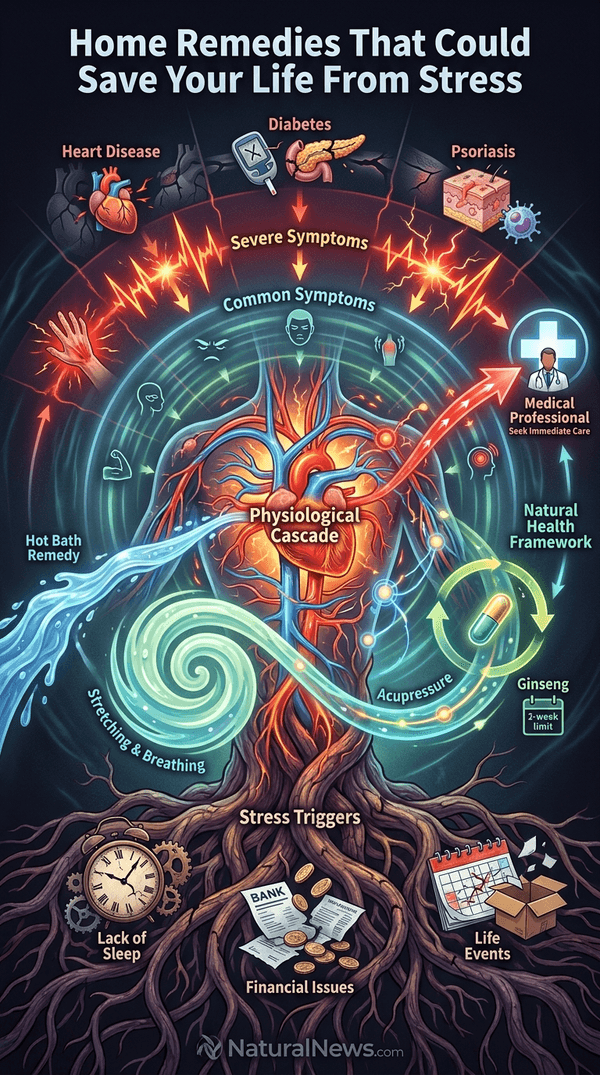
The first tier – common symptoms – includes irritability, muscle tension, concentration difficulty, a rapid heartbeat, headaches and exhaustion. These signs are presented as typical responses to everyday pressures.
The second tier – more severe symptoms – includes dizzy spells, rectal bleeding, chronic neck and back pain, trembling and hives. The article states that these severe symptoms require immediate medical contact.
The guide attributes stress to a variety of sources. Lack of sleep is listed as a primary cause, along with exams or project deadlines. Financial issues such as poverty, unemployment and debt are also cited, as are family issues including births, deaths, marriage and divorce. These causes reflect a broad view of stress as a response to both acute and chronic life challenges.
According to the article, stress is not merely a psychological burden but a condition linked to serious physical illnesses [1]. It states that heart disease, asthma, diabetes and psoriasis are associated with or caused by stress.
Because of these connections, the article concludes that reducing stress is important for overall health. The remedies that follow are offered as home-based options within a natural health framework.
Hot Bath, Stretching and Acupressure
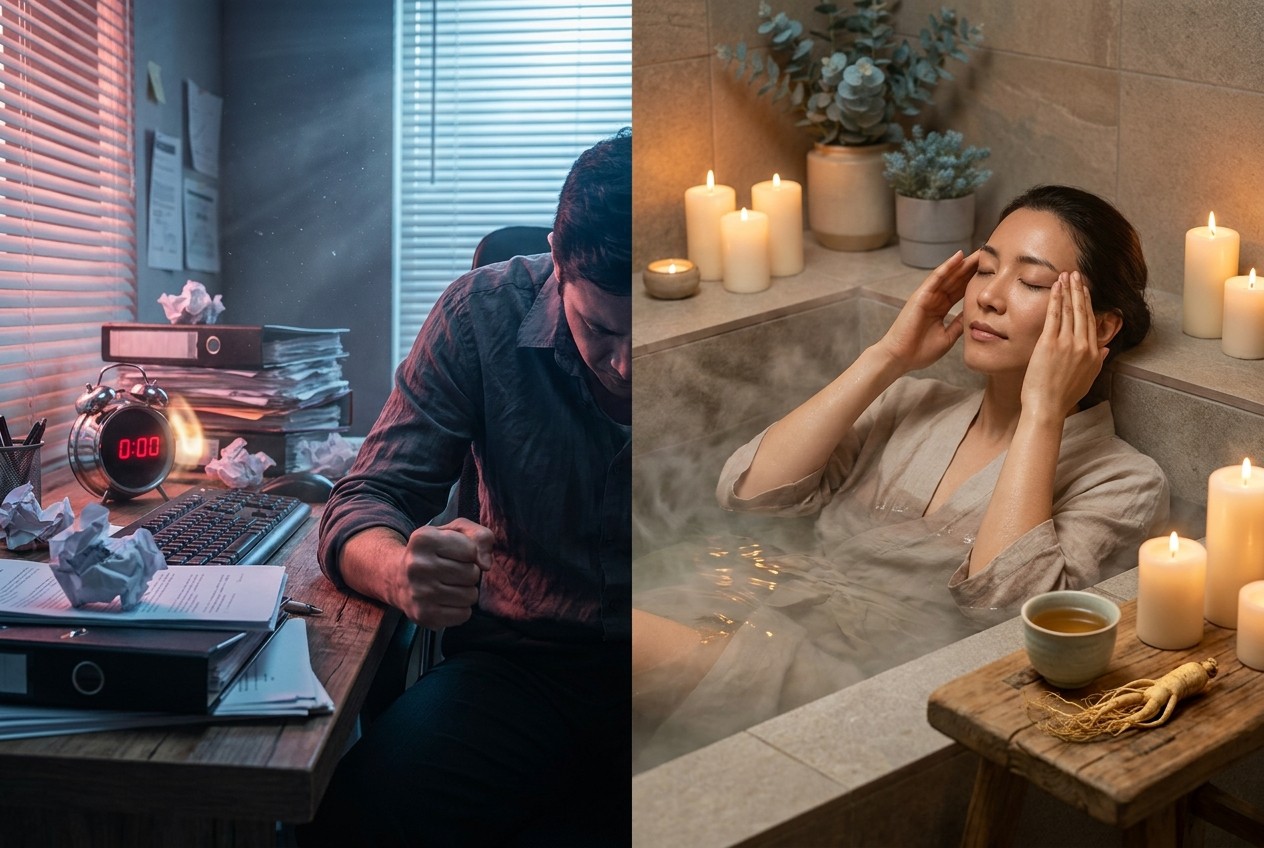
The article recommends a hot bath as a simple home remedy. It states that a hot bath can restore blood circulation to extremities such as toes and fingertips, helping to counter the body’s stress response. This aligns with the broader natural health approach that views external physical interventions as supportive of internal balance.
A stretching sequence is also described. The article instructs readers to roll their shoulders up and back, inhale deeply, hold for one second, slowly exhale, and relax the shoulders. This sequence is to be repeated five times. The guide presents this as a way to relax breathing and muscles during stressful periods.
The article also describes acupressure. It states that massaging the temples for five minutes is a form of acupressure that can indirectly relax muscles elsewhere, particularly the neck.
Additionally, it describes rolling the jaw left and right for a few seconds to relax jaw muscles and reduce overall tension. These remedies are presented as simple, home-based methods that require no special equipment or professional supervision.
Jaw Exercises and Ginseng
The article states that ginseng has been known to help reduce stress. It recommends taking one capsule of ginseng or a cup of ginseng tea three times a week during periods of increased stress, such as exams or tight deadlines. However, the guide warns that ginseng should not be taken continuously for longer than two weeks. It advises cycling usage rather than continuous use.
This caution is consistent with broader herbal medicine guidance. According to “1000 Cures for 200 Ailments,” a book by S. Sierpin, ginseng products can vary in quality and may be subject to adulteration by cheaper plants, so experts often recommend standardized extracts or purchasing from reputable suppliers [2].
Conclusion: When to Seek Medical Attention
The article concludes that reducing stress is important because many diseases are associated with or caused by stress. It also presents the remedies as home-based options within a natural health framework. Ultimately, it is part of a larger body of natural health information that often promotes lifestyle and herbal interventions for common conditions.
While it provides simple techniques, it also acknowledges the limits of home care by urging medical attention for severe symptoms. This dual message reflects a common position in natural health writing: empower readers with self-care while deferring to professional care when necessary.
References
- Home Remedies for Stress. https://www.homeremediesweb.com/remedies/stress-home-remedy/
- 1000 Cures for 200 Ailments – Integrated Alternative and Conventional Treatments for the Most Common Illnesses. by S Sierpin
Explainer Infographic
Submit a correction >>
Tagged Under:
acupressure, alternative medicine, Cures, ginseng tea, healing, herbal medicine, Herbs, home remedies, hot bath, jaw exercises, longevity, mental, Mind, mind body science, Natural, natural cures, natural health, natural medicine, prevention, remedies, stress, stress reduction, stress relief, stretching
This article may contain statements that reflect the opinion of the author
RECENT NEWS & ARTICLES