Beyond Blue Light Glasses: Herbs and Nutrients That Actually Reverse Digital Eye Damage
02/11/2026 / By Chase Codewell
The Digital Vision Crisis: Why Conventional Eye Care Is Failing You
If your eyes feel dry, tired, or blurred after a day at the computer, you’re not alone. Three-quarters of people using digital devices experience eye strain, according to research [1]. The standard prescription from conventional optometry is often a one-size-fits-all solution: expensive blue-light-blocking glasses, artificial tears, and pain medications. But these merely mask symptoms.
The root of the problem is being ignored. Digital eye strain is fundamentally an autonomic nervous system disorder triggered by mental stress and visual fatigue, not simply a case of dry eyes [2]. The industry has built a lucrative model on recurring revenue from prescriptions and drops, with little incentive to solve the underlying issue [2]. Your eye doctor rarely asks about your stress levels, sleep quality, or nutritional status—critical factors that govern visual function [2]. This symptom-management approach leaves millions trapped in a cycle of discomfort while the real causes—nervous system imbalance, cellular damage from blue light, and poor blood flow—worsen unchecked.
The Adaptogenic Breakthrough: How Rhodiola rosea Stabilizes Vision in Just 4 Days
A paradigm shift is emerging from a triple-blind study published in Ophthalmic and Physiological Optics. It revealed that Rhodiola rosea, an adaptogenic herb, significantly reduced vision instability and blurred vision after just four days of use [2]. Participants taking 1,200 mg daily developed dramatically more stable visual accommodation at the critical distances for monitors and smartphones [2].
Why does this herb work where eye drops fail? Rhodiola addresses the core issue: a stressed nervous system. Its active compounds, rosavins and salidroside, regulate neurotransmitters, balance the stress response, and lower the cortisol that spikes during demanding screen work [2]. When you’re mentally stressed, your entire visual focusing system breaks down. As an adaptogen, Rhodiola helps your nervous system maintain balance under the specific stress that screens create [2]. This internal stabilization is something external drops or lenses can never achieve.
This research highlights a critical truth: your ability to focus depends on brain mechanisms controlling arousal and attention, not just the muscles in your eyes [2]. By calming the nervous system, Rhodiola supports the entire visual apparatus from the inside out.
Your Internal Sunglasses: Strategic Nutrients That Shield Your Retina
Beyond nervous system support, lasting protection requires shielding your eyes at the cellular level. Strategic nutrients act as your body’s built-in defense system against the constant barrage of digital light.
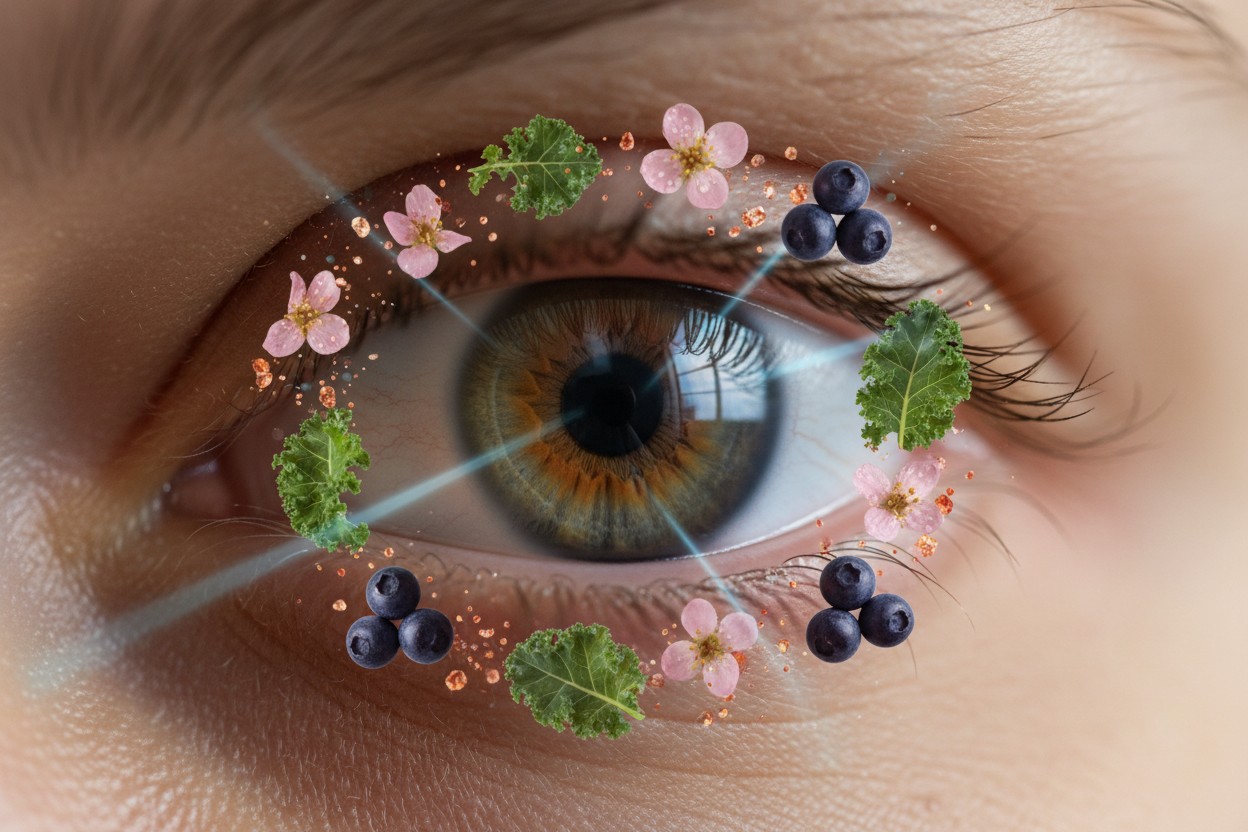
Lutein and zeaxanthin are crucial carotenoids that accumulate in the macula, the center of your retina. They function as natural ‘internal sunglasses,’ filtering harmful blue light before it can damage photoreceptor cells [3]. Your body cannot produce these, so you must obtain them from foods like kale, spinach and egg yolks, or through targeted supplementation [2]. Research shows they provide immediate functional benefits, sharpening visual contrast and reducing glare discomfort [3].
Other nutrients offer complementary, powerful protection. Bilberry extract, rich in anthocyanins, strengthens retinal capillaries and can improve night vision [2][4]. The potent antioxidant astaxanthin has a unique ability to cross the blood-retinal barrier, directly reducing oxidative stress and eye strain from screen use [2]. Furthermore, foundational minerals are critical. Magnesium glycinate helps relax the eye’s focusing muscles, while zinc concentrates in the retina to support vitamin A metabolism [2]. Together, these compounds form a comprehensive nutritional shield that conventional eye care completely overlooks.
Simple Workspace Hacks That Prevent Damage Before It Starts
While internal support is vital, your external environment plays a decisive role. Simple, overlooked adjustments can dramatically reduce strain.
Implement the 20-20-20 rule with intention. Every 20 minutes, look at something 20 feet away for 20 seconds. During those seconds, blink deliberately 10 times to redistribute your tear film, then close your eyes completely for 5 seconds [2]. This simple practice prevents accommodative spasm, a main cause of persistent blur.
Optimizing your physical setup is equally important. Position your monitor so the top is at or slightly below eye level; this reduces exposed ocular surface area and slows tear evaporation [2]. Maintain a distance of 23-25 inches for monitors and 16-18 inches for phones. Reduce harsh overhead fluorescent lighting, use a humidifier if indoor humidity drops below 40%, and position your desk perpendicular to windows to minimize glare [2].
These strategies address the physical triggers of digital eye strain. Yet, they are seldom discussed in a standard eye exam, which focuses on writing prescriptions rather than empowering patients with preventive, holistic knowledge [2].
Rejecting the Symptom-Management Model: A Holistic Path to Visual Resilience
True visual resilience in the digital age requires a radical departure from the symptom-management model promoted by conventional optometry and the pharmaceutical industry. It demands a holistic approach that addresses root causes: nervous system balance, cellular protection and optimal blood flow.
The path forward is one of self-empowerment. It combines the adaptogenic support of herbs like Rhodiola rosea with the cellular defense offered by lutein, zeaxanthin, bilberry and astaxanthin [2][3]. It incorporates essential minerals and strategic workspace habits. This integrated protocol doesn’t just soothe irritation; it builds long-term visual strength from the inside out.
Conventional care profits from your recurring discomfort. The natural, holistic approach empowers you with the knowledge to solve the problem. By understanding that digital eye strain is a whole-body issue—tied to stress, nutrition and environment—you can reclaim control over your eye health. This is the knowledge that the establishment often overlooks, because it leads to sustainable wellness, not endless dependency. For deeper insights into natural protocols that conventional ophthalmology ignores, resources like Jonathan Landsman’s Eye Health Docu-Class, which brings together leading holistic experts, can be invaluable [2].
In a world dominated by screens, your vision is precious. Protecting it requires looking beyond the blue-light glasses on the shelf and embracing the powerful, natural solutions within and around you.
References
- Surprising ways to protect your vision from screen damage by: Stephanie Woods | February 4, 2026 (NaturalHealth365)
- Surprising ways to protect your vision from screen damage – NaturalHealth365
- An eye opening prescription How your diet can fortify vision in a digital world – NaturalNews.com, November 24, 2025.
- How Your Diet Can Significantly Improve Your – Mercola.com, September 19, 2016.
- Digital eye strain: How to protect your vision in the screen-dominated world – NaturalNews.com. 2026-02-01.
- Surprising ways to protect your vision from screen damage – beforeitsnews.com/health. 2026-02-01.
- Primal Endurance Escape Chronic Cardio and Carbohydrate Dependency and Become a Fat Burning Beast – Dr Mark Sisson.
- Get Healthy Now A Complete Guide to Prevention Treatment and Healthy Living – Gary Null.
Submit a correction >>
Tagged Under:
alternative medicine, anthocyanins, artificial tears, astaxanthin, Bilberry extract, blue light, blurred vision, carotenoids, digital eye strain, dry eyes, eye health, herbal medicine, Herbs, lutein, natural cures, natural health, natural medicine, Naturopathy, optometry, phytonutrients, remedies, retina, Rhodiola Rosea, rosavins, salidroside, spinach, vitamin A, zeaxanthin, zinc
This article may contain statements that reflect the opinion of the author
RECENT NEWS & ARTICLES