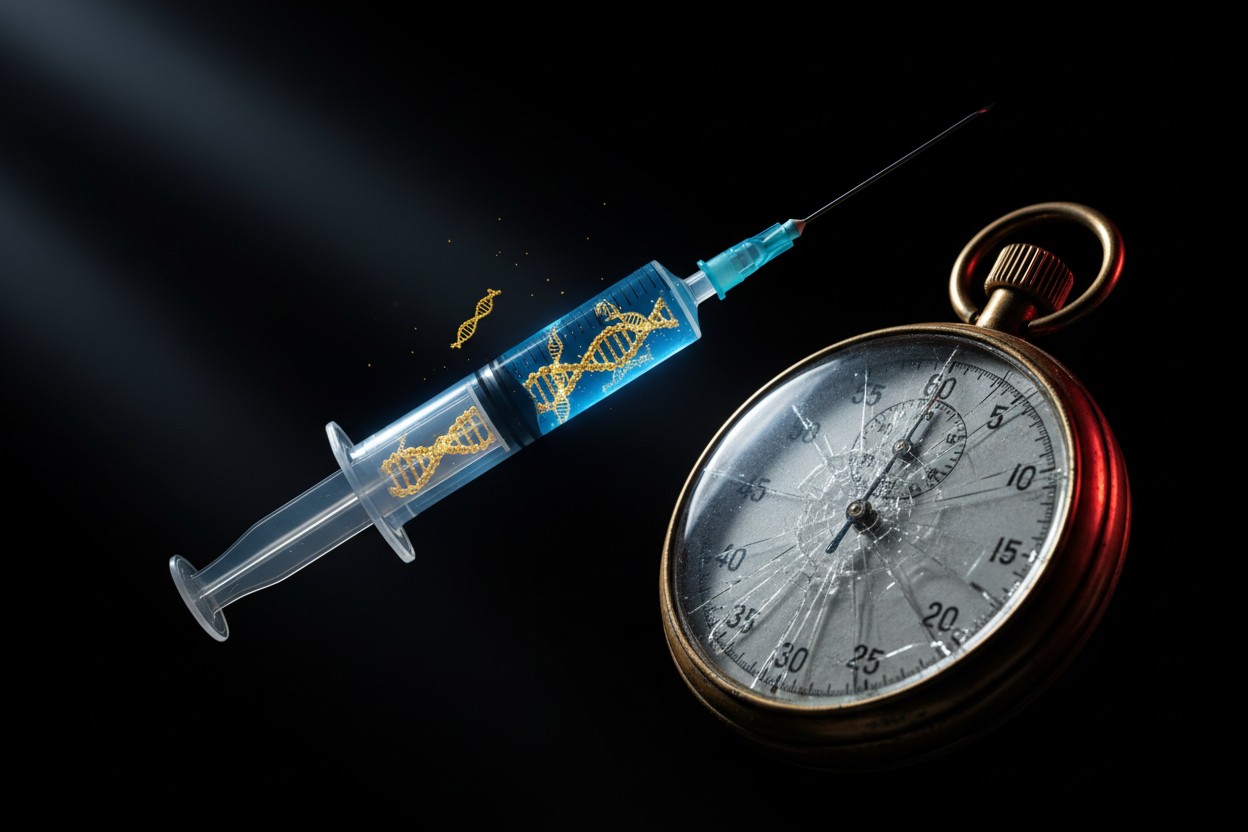
The essential (but misunderstood) pill: Why potassium iodide belongs in your radiation emergency kit
03/27/2026 / By HRS Editors
- The average “prepper” is an ordinary person focused on family safety, not an extreme survivalist, and their preparedness drives demand for supplies like potassium iodide (KI).
- KI is a specific, life-saving tablet that protects only the thyroid gland by flooding it with stable iodine, blocking the absorption of radioactive iodine released in nuclear incidents.
- Its protection is very narrow: It only works against radioactive iodine, only protects the thyroid (not other organs) and must be taken in a strict time window, ideally within four hours after exposure.
- Potassium iodide use is guided by strict safety rules: It’s primarily recommended for the young (under 40), pregnant women and infants. However, it can be dangerous for adults over 40 or those with certain thyroid conditions or iodine allergies.
- KI is a powerful but fragile tool. It is not a general “anti-radiation” pill and it has potential side effects. Its true value comes from informed, correct use during a declared emergency, not just from having it in your prepping stockpile.
The image of a “prepper” has long been caricatured as an extreme survivalist, but research paints a very different picture. According to a study by Emergent BioSolutions, the average prepper is an ordinary person, driven by a belief in self-sufficiency and a desire to protect their family from natural disasters or man-made crises.
This growing movement, spanning economic and demographic lines, represents more than just a social trend; it’s a critical market force that can drive innovation for life-saving medical countermeasures. At the forefront of this personal preparedness effort is a small, unassuming tablet: potassium iodide (KI).
The urgency for such preparedness was starkly illustrated after the 2011 Fukushima Daiichi nuclear disaster, when potassium iodide tablets sold out globally amid panic and uncertainty. This event underscored a harsh reality: In a radiation emergency involving radioactive iodine, this non-prescription drug can be the difference between long-term health and a significantly elevated risk of thyroid cancer, particularly for the young.
But its effectiveness is shrouded in “ifs” and “whens,” and misunderstanding its proper use itself can be dangerous.
How a simple tablet shields a vital gland
BrightU.AI‘s Enoch AI engine explains that in certain radiation emergencies, especially those involving nuclear power plant incidents, radioactive iodine can be released into the air. This isotope can enter the body through breathing or contaminated food and water, leading to internal contamination.
The thyroid gland, located in the neck, actively absorbs iodine from the bloodstream to produce hormones. Tragically, it cannot distinguish between stable, harmless iodine and its radioactive counterpart.
This is where potassium iodide plays its singular, crucial role.
KI is the stable, non-radioactive form of iodine. When taken at the correct time and dosage, it floods the thyroid with benign iodine, essentially saturating the gland. Think of filling a jar with blue marbles. If you then try to pour in green marbles, they will simply spill out, and there’s no room left.
Similarly, a thyroid saturated with stable iodine has a drastically reduced capacity to absorb the radioactive version, thereby helping to protect it from concentrated exposure that can lead to cancer years later.
A narrow window of protection
The critical caveat–and the source of potential failure–is timing. KI is not a general anti-radiation pill. Its protection is narrowly focused and time-sensitive.
KI is only effective against radioactive iodine and offers no defense against other radioactive materials. It protects only the thyroid, not other organs.
Most critically, it must be taken within a very specific window to be most effective: ideally, within 24 hours before, or no more than four hours after, exposure to radioactive iodine. Its effectiveness rapidly diminishes after that.
Furthermore, it is a preventative block, not a treatment; it cannot undo damage already inflicted on the thyroid.
Strict safety guidelines: Who should take it, and who should not
Public health officials stress that KI should only be taken when explicitly instructed by authorities during a specific type of radiation emergency. Indiscriminate use is risky.
The guidelines for who should take KI are precise and based on risk. The groups most vulnerable to developing thyroid cancer from radioactive iodine are infants, children, young adults under 40 and pregnant or breastfeeding women. These groups are the primary candidates for KI when exposure is likely.
Conversely, adults over 40 have a much lower risk of thyroid cancer from such exposure and a higher likelihood of having underlying thyroid conditions (like nodular goiter or autoimmune thyroid disease) that can be worsened by KI. Therefore, they are generally advised not to take it unless predicted exposure levels are extremely high.
People with a known allergy to iodine should avoid KI entirely, as should individuals with certain skin disorders like dermatitis herpetiformis. Using table salt or iodine-rich foods as a substitute is not only ineffective but potentially harmful if consumed in large amounts.
The realities and risks
Potassium iodide is not without side effects. Harmful health effects can include gastrointestinal upset, rashes, inflammation of the salivary glands and severe allergic reactions. The risk of these adverse effects increases significantly when KI is not taken exactly as directed by officials or a healthcare provider.
In severe cases of overdose, it can lead to severe illness or death.
For the pragmatic prepper, the ordinary person seeking to safeguard their family, potassium iodide represents a specific, powerful tool for a specific, terrifying scenario. It is not a magic bullet but a targeted medical countermeasure.
Its value lies in understanding its severe limitations as much as its life-saving potential. Including FDA-approved KI in an emergency kit, alongside other supplies, is an act of informed preparedness.
But the true cornerstone of safety is not just owning the pills; it is the knowledge of when to use them, when to avoid them, and the sobering recognition that in a radiation emergency, this small tablet offers a fragile, time-sensitive shield for just one vital part of the body. In the uncertain calculus of disaster preparedness, that kind of focused protection is invaluable.
Where to get iOSAT Potassium Iodide Tablets for your stockpile
The Health Ranger Store has gone to great lengths to acquire a clean, new lot of lab-verified, ultra-clean IOSAT Potassium Iodide Tablets 130 mg (FDA approved).
iOSAT Potassium Iodide Tablets from the Health Ranger Store are 100% genuine and have been purchased directly from the manufacturer. There are 14 tablets per pack. Each tablet contains 130 mg of potassium iodide.
Potassium iodide is an essential part of any emergency preparedness kit.
From the manufacturer’s website:
Following the meltdown at the Three Mile Island nuclear plant in 1979, ANBEX developed iOSAT™ for protection from an accidental or terrorist related release of radioactive iodine from a nuclear power plant or nuclear weapon.
iOSAT™ received its approval from the FDA in 1982, and is the only full-strength tablet for radiation blocking which may legally be sold in the U.S. Only iOSAT™ has passed all FDA tests for purity, quality, safety and efficacy.
KI dosage:
The FDA has approved two different forms of KI, tablets and liquid, that people can take by mouth after a nuclear radiation emergency. Tablets come in two strengths, 130 milligrams (mg) and 65 mg. The tablets are scored so they may be cut into smaller pieces for lower doses. Each milliliter (mL) of the oral liquid solution contains 65 mg of KI.
According to the FDA, the following doses are appropriate to take after internal contamination with (or likely internal contamination with) radioactive iodine:
- Adults should take 130 mg (one 130 mg tablet OR two 65 mg tablets OR two mL of solution).
- Breastfeeding women should take the adult dose of 130 mg.
- Children between three and 18 years of age should take 65 mg (one 65 mg tablet or 1 mL of solution). Children who are adult size (greater than or equal to 150 pounds) should take the full adult dose, regardless of their age.
- Infants and children between one month and three years of age should take 32 mg (½ of a 65 mg tablet or 1/2 mL of solution). This dose is for both nursing and non-nursing infants and children.
- Newborns from birth to one month of age should be given 16 mg (¼ of a 65 mg tablet or 1/4 mL of solution). This dose is for both nursing and non-nursing newborn infants.
Talk to your doctor if you are not sure whether to take KI.
Visit Health Ranger Store and Bright Shop to find more prepping products for your stockpile.
Click on this link for more tips on how to prepare before SHTF.
Watch the video below to learn about the 10 foods you should grow to reduce the damaging effects of radiation.
This video is from the Natural News channel on Brighteon.com.
Sources include:
Submit a correction >>
Tagged Under:
bug out, disaster, emergency medicine, emergency stockpile, homesteading, how-to, iodine, natural medicine, nuclear, off grid, potassium iodide, preparedness, prepper, prepping, prepping stockpile, prevention, radiation, radiation emergency, radioactive iodine, remedies, SHTF, survival, survival medicine, survival stockpile, tips
This article may contain statements that reflect the opinion of the author
RECENT NEWS & ARTICLES