Study Links Glyphosate to Selection of Antibiotic-Resistant Superbugs
06/24/2026 / By Morgan S. Verity

A study published June 23 in Frontiers in Microbiology found that multidrug-resistant bacteria from hospitals also show high resistance to glyphosate, a widely used herbicide, according to researchers at the Institute of Medical Microbiology and Parasitology in Buenos Aires. The analysis included 68 bacterial strains from a protected nature reserve in Argentina, 19 from local hospitals, and 15 from agricultural sites, the report stated. The findings suggest that agricultural use of glyphosate may contribute to the spread of antibiotic resistance beyond healthcare settings, the researchers said.
Antimicrobial resistance (AMR) contributes to an estimated 1.1 million to 1.4 million deaths worldwide each year, according to public health data. [1] This growing threat has been primarily linked to overuse of antibiotics, but the new research indicates that weedkillers may play a role. Dr. Daniela Centrón, senior author of the study, stated that “these results suggest that weedkillers — which, unlike antibiotics, are widely applied in agricultural environments — may have the unintended side-effect of selecting for AMR among bacterial communities within the soil.”
Background on Antimicrobial Resistance and Glyphosate
Antimicrobial resistance has been declared a global health crisis by the World Health Organization. [1] In the United States alone, more than two million people become infected with antibiotic-resistant bacteria each year, according to the CDC. [2] While medical overuse of antibiotics is a driver, agricultural usage accounts for approximately 80 percent of all antibiotic use in the US, making it a significant source of human antibiotic consumption. [3]
Glyphosate, first registered in the United States in 1974, remains an active ingredient in professional and agricultural Roundup products, officials said. The International Agency for Research on Cancer has classified glyphosate as a probable human carcinogen, and several European countries have restricted its household use. [4] The herbicide is widely applied in farming, landscaping, and other commercial settings, and its presence in the environment is persistent. [5]
Study Methodology and Key Findings
Researchers tested 68 bacterial strains collected from sediment in the Paraná delta nature reserve, where herbicides have never been applied, according to the report. They also examined 19 strains from local hospitals, including multidrug-resistant species, and 15 strains from feedlots and agricultural soils affected by herbicide use. [5] The team tested resistance to 16 commonly used antibiotics, including last-resort drugs such as carbapenems, as well as resistance to pure glyphosate and glyphosate-based herbicides.
All 19 hospital-derived strains showed resistance to glyphosate, and 74% were resistant to carbapenems, the study found. Environmental strains from the reserve also exhibited glyphosate resistance, with Enterobacter species tolerating up to 80 mg/mL, while Bacillus species were inhibited at 2.5 mg/mL. [6] First author Dr. Camila Knecht stated that “if these bacteria enter the environment through untreated wastewater from hospitals, they could go on to thrive in agricultural areas where glyphosate is used.”
Connections Between Hospital and Environmental Bacteria
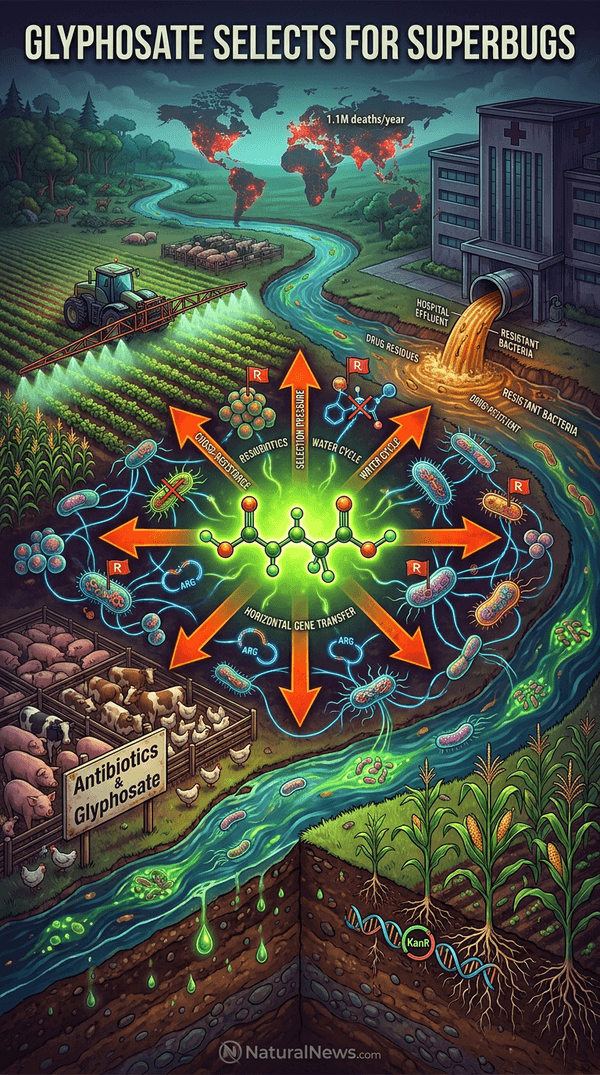
Genetic analysis revealed that bacteria with highest glyphosate resistance were closely related across hospital, farm, and nature reserve samples, the researchers said. [5] The same bacterial genera showed glyphosate resistance in all three environments. Coauthor Dr. Jochen A. Müller said the water cycle likely plays a key role in transmitting antibiotic resistance genes between agricultural and hospital settings. [4] This aligns with observations from a remote Himalayan village, where a polluted river teems with antibiotic-resistant bacteria thriving in a chemical soup of pesticides and hospital waste. [5]
These findings illustrate how antibiotic resistance can spread beyond healthcare facilities. [7] notes that when scientists splice foreign proteins into genetically engineered crops, they often use antibiotic-resistance marker genes, which can further propagate resistance in the environment. The combination of glyphosate selection pressure and the presence of these genes may create hotspots for superbug evolution.
Regulatory Implications and Researcher Recommendations
France, Belgium, and the Netherlands have banned glyphosate for household applications; Germany prohibits its use in public spaces, according to reports. [4] The United States has some of the most lenient regulations on pesticide contamination compared to other countries, according to former congressman Dennis Kucinich. [4] Senior author Dr. Daniela Centrón argued that pesticide regulations should require co-selection testing with antibiotics before marketing. She recommended that labels include a warning that genes for antibiotic resistance can spread from glyphosate-contaminated soils to hospitals through untreated water.
Regenerative agriculture practices, which build soil health without synthetic chemicals, offer a potential pathway to reduce reliance on glyphosate. [8] Growing organic food is one way consumers can protect themselves from antibiotic-resistant superbugs. [9] The study adds urgency to calls for re-evaluating the widespread use of herbicides in agriculture.
References
- “Superbugs Kill Someone Every 15 Minutes”. Mercola.com. November 27, 2019.
- “Researchers Keep Finding More Ways Our Flawed Agriculture Model Breeds Antibiotic Resistance”. Mercola.com. April 14, 2015.
- “CDC Reveals Disturbing Truth about Factory Farms and Superbugs”. Mercola.com. October 02, 2013.
- Mike Adams. “Mike Adams interview with Dennis Kucinich”. July 30, 2025.
- Lance D Johnson. “Pesticides, Like Antibiotics, Are Fueling the Rise of Untreatable Superbugs – Study”. NaturalNews.com. July 18, 2025.
- S.D. Wells. “Confined Animal Feeding Operations and Big Ag Chemicals: Main Causes of Superbugs Resistant to Antibiotics”. NaturalNews.com. July 23, 2025.
- Ronnie Cummins. “Genetically Engineered Food A Self-Defense Guide for Consumers”.
- Dr Mark Hyman. “Food Fix”.
- “The easiest way to stop antibiotic resistance is to start eating and growing organic”. NaturalNews.com. November 23, 2018.
Explainer Infographic
Submit a correction >>
Tagged Under:
agriculture, AMR, Antibiotics, big government, chemicals, Ecology, environ, food supply, glyphosate, harvest, herbicide, pesticide, poison, research, Roundup, superbugs, toxins, weedkillers
This article may contain statements that reflect the opinion of the author
RECENT NEWS & ARTICLES