Home-Based Interval Training Improves Aerobic Fitness in Older Adults, Study Finds
08/19/2026 / By Petra Stone
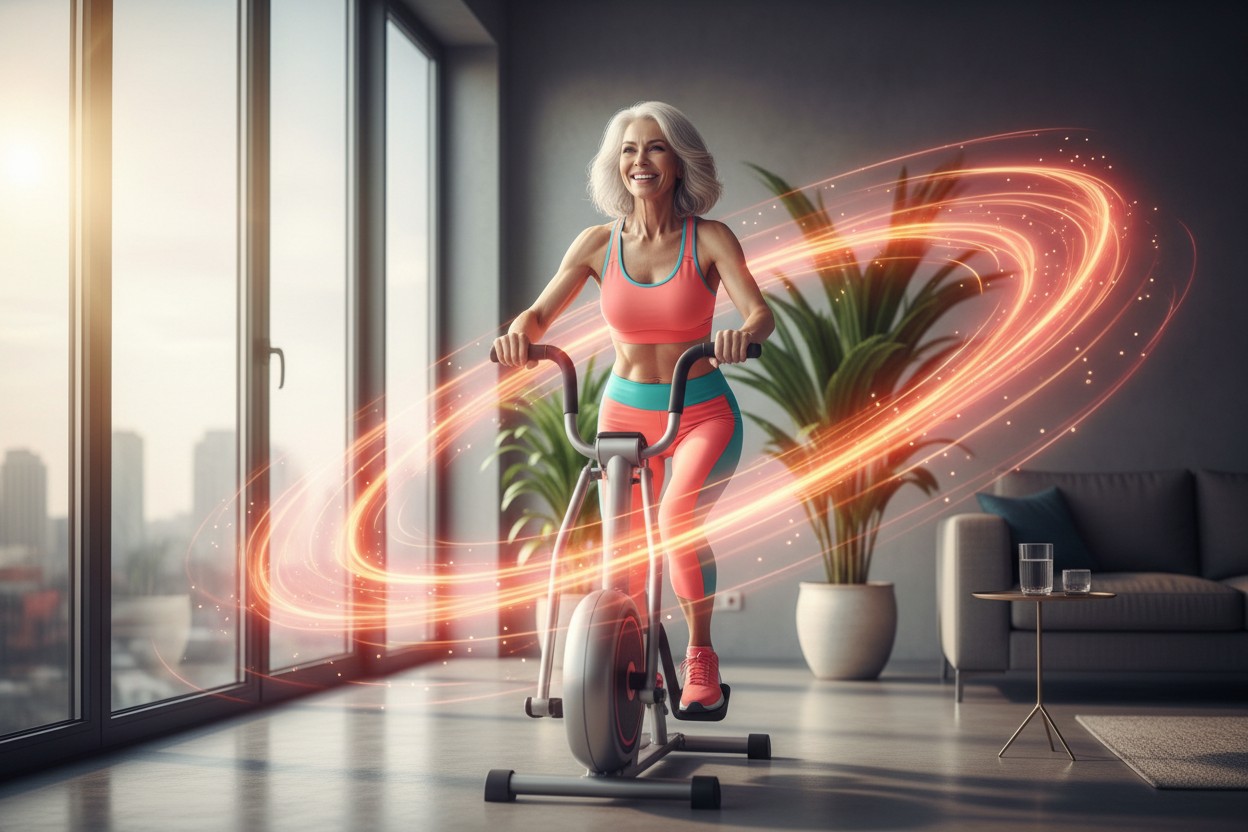
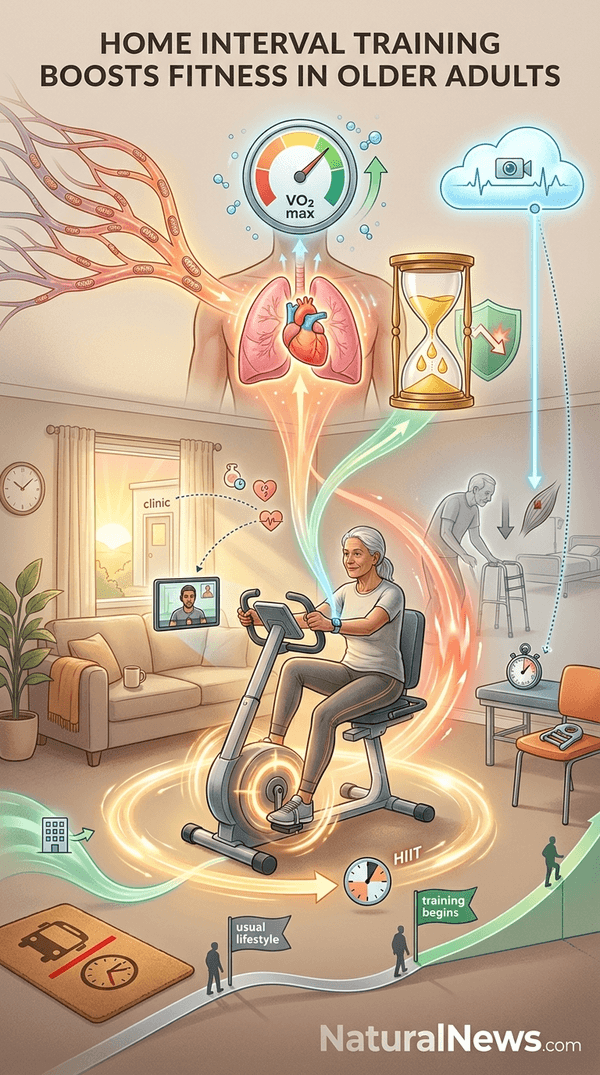
A study of 20 adults ages 61 to 74 found that eight weeks of home-based high-intensity interval training improved aerobic fitness and reduced fat mass, according to the research team. Training was performed on an all-extremity ergometer at home four days per week, with live video supervision and cloud-based heart-rate tracking, the report stated.
Average VO2 max increased after the training block, and fat mass dropped by approximately 3 pounds, according to the study. Participants completed 96 percent of scheduled sessions, with no training-related adverse events, the report said.
High-intensity interval training uses short bursts of hard effort with easy recovery in between, a format that exercise guidance has indicated can deliver benefits in less time than longer steady-state sessions, according to Mercola.com [1]. An analysis pooling data from 11 randomized controlled trials found that short exercise bouts produced fitness gains comparable to longer continuous workouts, according to a report published in the Journal of Nutrition, Health and Aging [6].
Study Design and Protocol
Researchers enrolled 20 healthy adults, 11 women and 9 men, who had no major clinical disease, according to the study. Participants completed a two-phase protocol: an eight-week period of usual lifestyle, followed by eight weeks of supervised interval training at home. Each person served as their own control, and no separate comparison group was used.
Workouts involved short bursts of hard effort on a non-weight-bearing arm-and-leg ergometer, with remote video supervision and real-time heart-rate monitoring through cloud-based technology, according to the report. The machine works the arms and legs together without requiring participants to support their own body weight, the study stated.
Interval training programs commonly use brief, intense efforts as a time-efficient alternative to longer steady-state exercise, according to Michael Spira’s “The 12-minute weight-loss plan high intensity interval training + smart eating = fast easy weight loss” [3]. Simple fitness tests can give a good indication of expected lifespan, and doctors and patients can use such measures to track markers of longevity over time, according to James Powers, MD, a professor of geriatric medicine at Vanderbilt University Medical Center [5].
Measured Outcomes
Aerobic capacity was assessed through VO2 max, a measure of how much oxygen the body can put to use during hard exercise, and body composition was assessed using a scan that separates fat from lean tissue, according to the study. Researchers noted that VO2 max and body fat are tied to overall mortality risk and tend to decline with age, the report stated.
During the usual-lifestyle period, aerobic fitness dipped slightly, according to the report. After eight weeks of interval training, VO2 max rose above baseline levels, the study stated.
“This gives us very specific information we can use,” Powers said about the role of fitness assessments in tracking health over time [5]. Regular exercise training has been associated with reductions in C-reactive protein and modulation of inflammatory markers in cardiac rehabilitation and coronary heart disease patients, according to research compiled in James M. Rippe’s “Lifestyle Medicine” [4].
Results: Fitness and Fat Mass
Fat mass held steady during the control period and then dropped by roughly three pounds after the training block, according to the research team. The authors reported a 96 percent completion rate for scheduled sessions and no adverse events related to home-based workouts.
The improvements occurred in a small sample without a separate control group, researchers said. The study authors described the findings as an early step toward testing the approach in people with chronic conditions, according to the report.
“It’s never too late to reap the benefits of regular exercise,” said Dr. Navarro, a physician specializing in senior health. “No matter how long it has been since you’ve exercised or how old you are, there is some sort of appropriate exercise that can boost your fitness, energy” [8]. A study published in the Annals of Internal Medicine found that walking three times per week significantly improved walking ability and slowed progression of peripheral artery disease, according to a report by NaturalNews.com [2].
Implications and Conclusion
Home-based training may lower barriers to structured exercise, including transportation, facility access, membership costs and mobility limits, according to researchers. The program used specialized equipment and live supervision, so it was not a do-it-yourself setup, the report stated.
The findings suggest that the relevant question is not whether older adults can train outside a facility but how to make such options available to more people, the authors said. The study’s limitations include the small number of participants and the absence of a separate control group, the report stated.
For adults over 55, deliberate daily activity such as step tracking has been shown to support extended lifespan and quality of life without requiring a gym membership or special equipment, according to NaturalNews.com [7]. The home-based interval program tested in the study points toward structured at-home exercise as one route for maintaining cardiorespiratory fitness in later years, the report stated.
References
- Mercola.com. “Short Bursts of Exercise Are Better Than Exercising Nonstop”. Mercola.com. August 22, 2014.
- NaturalNews.com. “Walking three times weekly slows decline from peripheral artery disease”. NaturalNews.com. August 25, 2006.
- Michael Spira. “The 12-minute weight-loss plan high intensity interval training + smart eating = fast easy weight loss”.
- James M. Rippe. “Lifestyle Medicine”.
- “These Basic Fitness Tests Could Predict Your Longevity”. Everyday Health. August 11, 2026.
- NaturalNews.com. “Study Confirms: Short ‘Exercise Snacks’ Deliver Fitness Gains Without Long Workouts”. NaturalNews.com. June 28, 2026.
- NaturalNews.com. “The step-count surge: How a simple habit after 55 rewrites the rules of aging”. NaturalNews.com. April 23, 2026.
- NaturalNews.com. “Exercise: The Fountain of Youth for Seniors – Defying Big Pharma’s Toxic Drugs and Reclaiming Natural Vitality”. NaturalNews.com. January 27, 2026.
Explainer Infographic
Submit a correction >>
Tagged Under:
aerobics, alternative medicine, exercise, fitness, health science, HIIT, lifestyle, longevity, natural health, natural medicine, Naturopathy, physical activity, tips
This article may contain statements that reflect the opinion of the author
RECENT NEWS & ARTICLES