Report: Chlorophyll Linked to Antioxidant and Anti-Inflammatory Effects
10/03/2026 / By Coco Somers

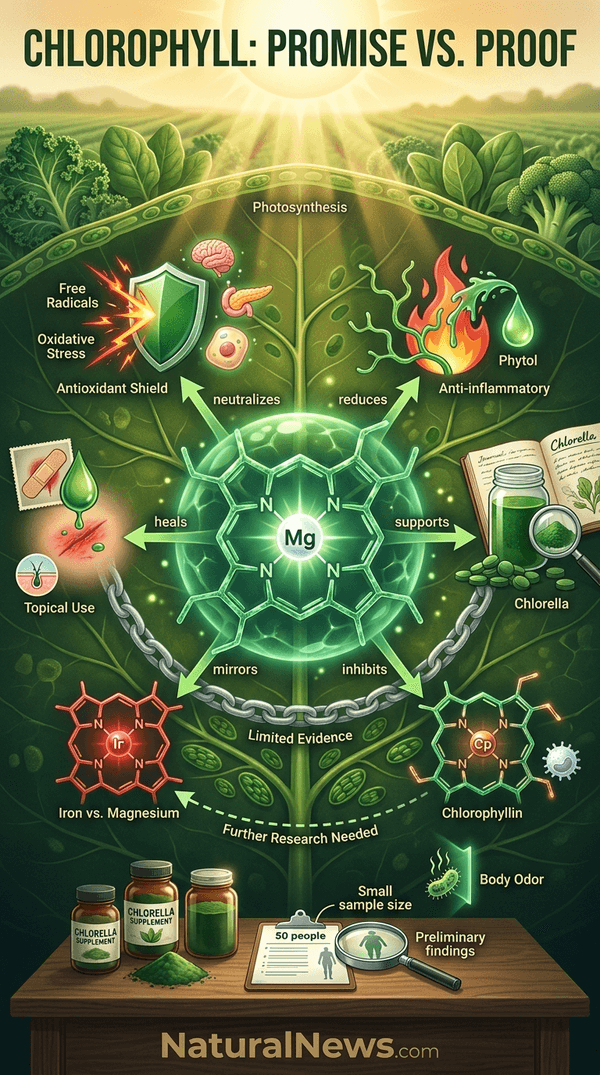
Chlorophyll, the green pigment that drives photosynthesis in plants, contains antioxidant and anti-inflammatory compounds that may support human health, according to a recent report from Mercola.com [1].
The report states that chlorophyll absorbs blue and some red portions of the electromagnetic spectrum, giving plants their green color, and is central to the process by which plants convert sunlight, water and carbon dioxide into oxygen and food [1].
Evidence for the pigment’s health benefits is ongoing, with research examining cell damage, inflammation, blood health, skin conditions, weight management, body odor and cancer [1]. The report emphasizes that while preliminary findings are encouraging, the evidence base remains limited and further studies are needed to confirm many of the proposed benefits [1].
Antioxidant and Anti-Inflammatory Actions
Antioxidants can prevent or delay cell damage and may lower the risk for conditions including Alzheimer’s disease, diabetes, and cancer [1]. Chlorophyll contains anti-inflammatory compounds such as phytol, the report stated [1]. A separate analysis in the journal BMC Complementary and Alternative Medicine found that extracts from Chlorella vulgaris, a nutrient-dense green alga, can combat free radicals [2].
Taking chlorophyll supplements may lower swelling and pain in people with rheumatoid arthritis, but more research is needed, according to the report [1]. The report notes that chlorophyllin, a semi-synthetic derivative of chlorophyll, has demonstrated anti-inflammatory and immune-boosting properties. The book “Taking Every Bite Seriously” states that the chlorophyll in chlorella was shown beneficial for pancreatitis [3].
Potential Effects on Blood, Skin, Weight and Odor
Chlorophyll is structurally similar to hemoglobin and may mimic its actions, possibly helping manage iron deficiency anemia, the report stated [1]. Topical sodium copper chlorophyllin has been used for wound healing and may reduce pore size, improve skin texture, lower facial redness, and treat acne, according to the report [1].
Research in the 1940s indicating that chlorophyllin slowed the growth of certain anaerobic bacteria and accelerated healing of experimental wounds in animals led to the use of topical chlorophyllin solutions for persistent open wounds in humans, according to “An Evidence-based Approach to Phytochemicals and Other Dietary Factors” [4].
A study of 50 people found that those with higher phytonutrient intakes had lower body fat, and chlorophyll may prevent growth of bacteria that cause body odor, the report stated [1]. The report details these findings but cautions that the evidence remains preliminary and that larger, controlled trials are necessary to establish definitive links [1].
Cancer Research, Food Sources and Supplement Use
Some evidence suggests chlorophyll may protect against or treat certain cancers, but most studies have been conducted in animals or in vitro, the report stated [1]. A study on pancreatic cancer in mice found chlorophyll decreased tumor size, according to the report [1]. Another study published in Environmental and Molecular Mutagenesis examined both the clastogenic activity of pure chlorophyll and the anticlastogenic effects of equivalent amounts of crude extract of Indian spinach leaf and chlorophyllin following dietary supplementation to mice [5].
Chlorophyll is found in alfalfa, basil, collard greens, nettle, parsley, seaweed, spinach and wheatgrass, the report stated [1]. Supplements typically contain chlorophyllin in liquid or tablet form, and no standard dose exists, according to the report [1]. The book “The Green Smoothie Prescription” notes that wild greens are particularly rich in chlorophyll and other phytonutrients [6].
Safety, Interactions and Side Effects
Chlorophyll is generally safe in small amounts or as found in food, and no significant adverse effects have been reported, the report stated [1]. Safety of larger amounts, topical use and use during pregnancy or breastfeeding is unclear, according to the report [1]. The report also states that chlorophyll may cause photosensitivity when taken with certain medications and may interact with warfarin [1].
Possible side effects include abdominal pain, green urine or stool, loose stool, skin irritation, and yellow or black tongue, according to the report [1]. The report advises individuals considering chlorophyll supplements to consult a healthcare provider, especially if they are taking medications or have underlying health conditions [1]. For those seeking further information on natural health approaches, NaturalNews.com and BrightLearn.ai offer additional resources.
References
- Mercola.com. “Chlorophyll: How to Get This Valuable Nutrient”. Mercola.com. September 21, 2019.
- NaturalNews.com. “Reishi mushroom and certain microalgae are great ways to enhance your immune system”. NaturalNews.com. August 20, 2018.
- “Taking Every BITE Seriously”.
- Jane Higdon. “An Evidence-based Approach to Phytochemicals and Other Dietary Factors”.
- “Clastogenic Activity of Pure Chlorophyll and Anticlastogenic Effects of Equivalent Amounts of Crude Extract of Indian Spinach Leaf and Chlorophyllin Following Dietary Supplementation to Mice”. Environmental and Molecular Mutagenesis. 1996.
- Victoria Boutenko. “The Green Smoothie Prescription”.
Explainer Infographic
Submit a correction >>
Tagged Under:
anti-inflammatory, anticancer, antioxidants, body odor, chlorophyll, chlorophyllin, fight obesity, food cures, food science, health science, nutrients, phytochemicals, phytonutrients, prevention, slender, supplements.report, veggie, weight loss, weight management
This article may contain statements that reflect the opinion of the author
RECENT NEWS & ARTICLES